
KAiTA Vision and Strategic Development Exchange: Diet Member Keiji Furuya Expresses Strong Praise for the Project
KAiTA Strategic Vision Exchange: Diet Member Keiji Furuya Expresses Strong Praise for the Project
Advancing Regional Revitalization and Industry-Academia-Research Integration to Build an International Technology Hub
[Tokyo, Japan] December 5, 2025
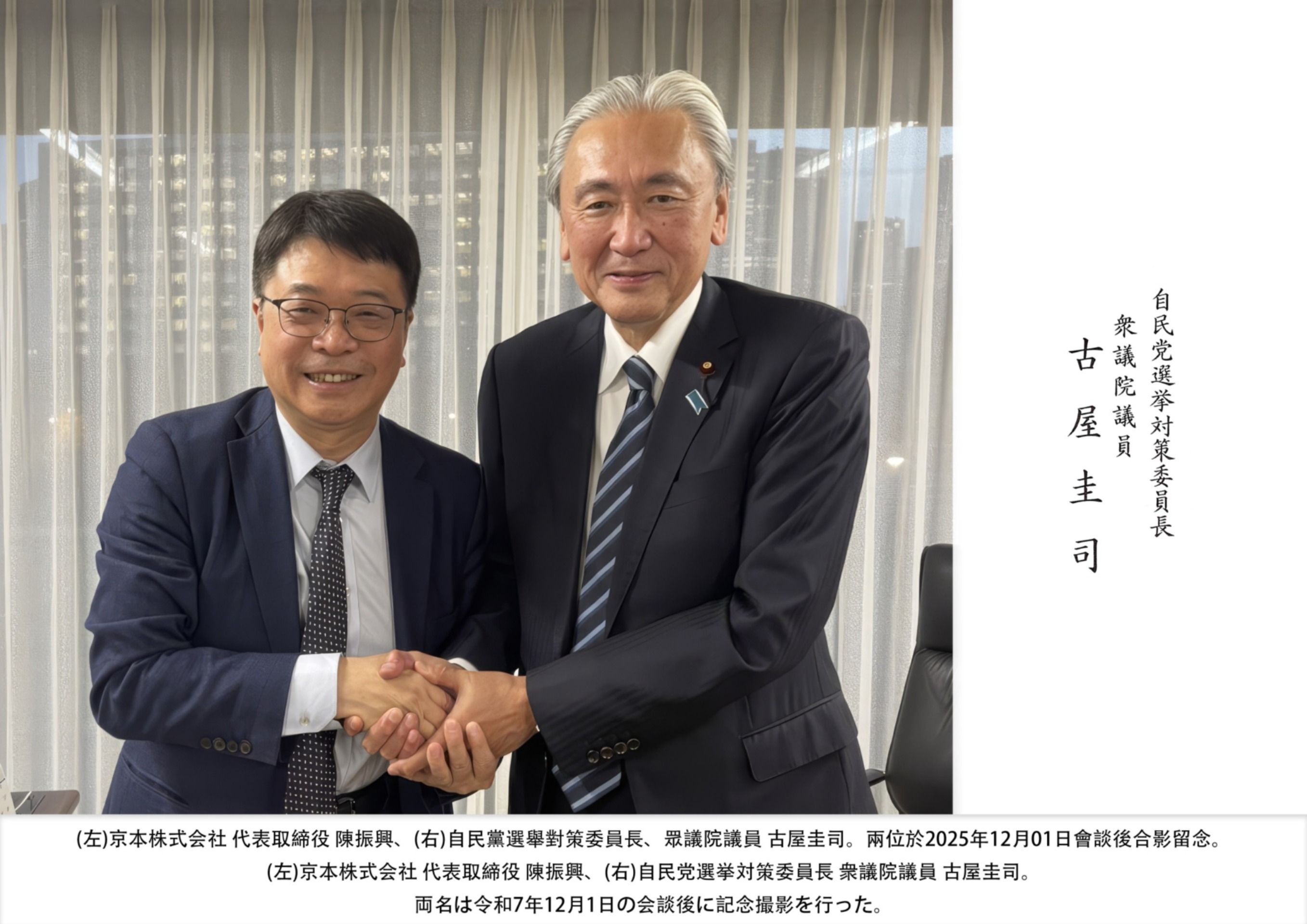
Chen Chen-hsing, President of Keiyo Co., Ltd., recently held discussions with Keiji Furuya, Chairman of the Japan-China Diet Members’ Consultative Council and a prominent cross-party member of the Japanese Diet, regarding the Kumamoto AI Technology Arena (hereinafter referred to as the KAiTA Project). During the meeting, President Chen presented KAiTA’s comprehensive vision for technological innovation and regional development and engaged in in-depth discussions on the long-term goal of establishing an internationally oriented smart technology hub in Kumamoto. The meeting was held on the afternoon of December 1, 2025, at the Members’ Office Building of the House of Representatives.
Diet Member Keiji Furuya expressed strong support for the direction and strategic approach of the KAiTA Project, noting its potential significance as a model for advancing local industrial transformation and promoting Taiwan-Japan technological cooperation. He also offered specific recommendations and guidance and indicated that he would provide necessary support and assistance moving forward.
■ KAiTA Project — Integrating Technology, Regional Revitalization, and International Collaboration
The KAiTA Project is based on the concept of a “Kumamoto Division of a Taiwan Technology Park,” leveraging the complementary strengths of the Taiwan-Japan industrial supply chains. The project focuses on key sectors including AI, semiconductors, smart manufacturing, and regenerative medicine, with the goal of creating a next-generation technology cluster with strong international appeal. The park will integrate R&D facilities, smart warehousing, education and training, corporate services, and production facilities to establish a multifunctional industrial base supporting regional revitalization and urban renewal. At the same time, the project focuses on enhancing urban functions through initiatives such as the redevelopment of transportation hubs, smart transportation systems, and the creation of balanced live-work communities, positioning KAiTA as an important engine for urban transformation and development.
■ Dual Benefits: International Technology Hub and Regional Economic Development
KAiTA demonstrates a strategic vision that integrates policy direction, industrial demand, and regional revitalization. Against the backdrop of global supply chain restructuring and intensifying technological competition, establishing R&D and manufacturing bases in regional communities while integrating local economies and talent represents a forward-looking and strategically significant approach.
If successfully implemented, the project is expected to generate three major benefits:
- Technological Self-Reliance and Supply Chain Security: Establishing a comprehensive domestic ecosystem spanning R&D, chip design, and manufacturing can reduce dependence on overseas supply chains while strengthening national economic security and technological self-reliance.
- Regional Industrial and Economic Revitalization: Establishing a technology park outside major metropolitan areas can promote local employment, infrastructure development, and the growth of surrounding industries, contributing to balanced regional economic and industrial development.
- International Collaboration and Market Connectivity: As an emerging technology hub in Asia, KAiTA is positioned to serve as a gateway for international companies seeking to enter the Japanese and broader Asian markets, while facilitating cross-border technology cooperation and investment.
■ Conclusion
As the Japanese government continues to increase investment in advanced technologies and international cooperation, KAiTA has the potential to become an important model project connecting national strategic priorities with regional development. The successful implementation of the project would not only strengthen Japan’s technological competitiveness but also stimulate regional economic growth, promote closer industry-academia-research collaboration, and gradually establish an international technology hub integrating R&D, manufacturing, and global market connectivity.